Traditional Vedic Methods to Clean and Maintain Brass Idols at Home: A Complete Guide
In Sanatana Dharma, the Pooja Ghar (home altar) is considered the vibrant energetic center of a household. The Murtis (sacred deities) and ritual utensils, predominantly crafted from brass (Pital), act as physical conductors for spiritual vibrations. Over time, exposure to atmosphere, oil lamps, camphor, and ritual bathings (Abhishekam) naturally causes brass to oxidize, forming a dark patina or green copper carbonate crust.
While modern chemical cleaners can instantly strip away tarnish, their harsh synthetic ingredients disrupt the spiritual sanctity (Pavitrata) of ritual items and can permanently erode the fine artistic carvings of the deities.
Traditional Vedic practices offer a holistic approach. By utilizing pure, elemental, and kitchen-available ingredients, you can restore a gold-like brilliance to your brass murtis while maintaining their spiritual purity and material longevity.
The Vedic Philosophy of Material Care
According to the Agama Shastras, every object used in divine service must undergo regular purification (Shuddhi). Cleaning brass murtis is not viewed merely as a household chore, but as a continuation of devotional service (Seva).
Brass is an alloy of copper and zinc. Copper represents solar energy, which inherently absorbs spiritual frequencies. When tarnish accumulates, it acts as a physical block, reducing the reflective beauty and acoustic resonance of the metal. Cleaning the metal with natural, earth-born elements rejuvenates its capacity to anchor positive energy in your living space.
5 Traditional Vedic Cleaning Elements
Vedic cleaning relies entirely on natural acids, mild organic abrasives, and moisture binders. These elements interact chemically with copper oxide without harming the structural integrity of the metal.
Tamarind (Imli): Contains natural tartaric acid. It is the most powerful traditional agent for breaking down tough, dark copper oxidation without scratching the underlying metal.
Fresh Lemon (Nimbu): Rich in citric acid, lemon brightens the alloy instantly and brings out the brilliant golden undertone characteristic of high-quality brass.
Vibhuti (Sacred Ash) or Wood Ash: A superb oil absorber and ultra-fine polishing agent. It helps clean residual ghee or oil from deep carvings without scratching.
Rock Salt (Sendha Namak): Acts as a mild, water-soluble abrasive that accelerates the cleaning action of natural acids.
Chickpea Flour (Besan) or Wheat Flour: Used to form a binding paste that pulls grease and lifted tarnish away from the metal’s surface.
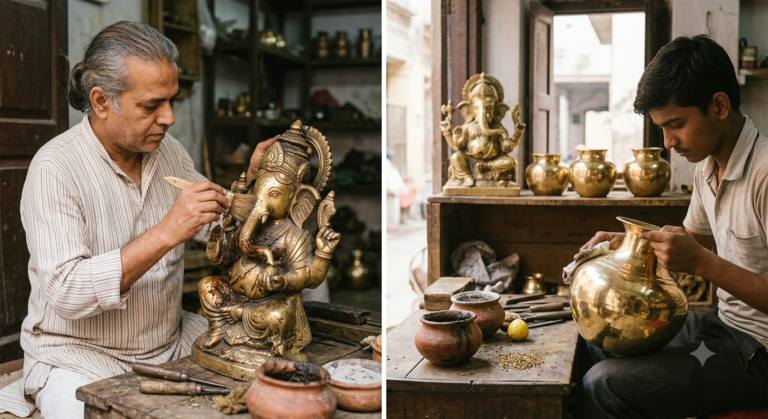
Step-by-Step: The Authentic Multi-Tier Cleaning Ritual
This comprehensive cleaning process preserves both the intricate details of your murtis and their spiritual sanctity.
1.Degreasing and Pre-Wash:
Step 1.
Before addressing the tarnish, you must remove layers of residual ghee, oil, sandalwood paste (Chandan), and vermilion (Kumkum). Dust the idol lightly with Vibhuti or warm chickpea flour. Rub gently with your fingers to bind and lift the oils, then rinse with lukewarm water.
2.Applying the Vedic Paste:
Step 2.
Prepare a smooth paste using tamarind pulp, a squeeze of fresh lemon juice, and a teaspoon of rock salt. Apply this paste evenly across the entire surface of the brass idol. For highly intricate areas like crowns, ornaments, or sacred hand gestures (mudras), use a soft-bristled cotton swab or an ultra-soft toothbrush to work the paste gently into the recesses.
3.The Active Rest Period:
Step 3.
Let the natural paste sit on the metal for 2 to 3 minutes. You will see the dark oxidization fade as the natural acids react with the copper tarnish. Do not leave acidic mixtures on brass for more than 5 minutes, as excessive exposure can cause the copper to bleed, leaving a temporary reddish hue.
4.The Purification Rinse:
Step 4.
Rinse the idol thoroughly under clean, running water. Ensure every trace of the acidic paste is washed out from the deep grooves. Any left-behind acid will trap moisture and accelerate localized green corrosion (verdigris).
5.Instant Moisture Extraction:
Step 5.
This is the most critical step for a spot-free finish. Immediately wipe the idol down with a dry, clean microfiber cloth or soft cotton towel. Ensure no water droplets remain in the folds of the carving, as standing water reacts with air to create dull mineral stains.
Advanced Protection: Maintaining the Golden Glow
Once your brass murtis and lotas have regained their pure brilliance, you can apply traditional maintenance techniques to minimize future tarnishing.
The Sacred Oil Seal
After drying the brass items completely, apply a single drop of pure organic mustard oil, sesame (Til) oil, or coconut oil to your palms. Lightly pat and rub the surface of the idol. Take a fresh, dry cloth and buff away any excess oil. This leaves a microscopic, non-greasy lipid layer that shields the zinc and copper from atmospheric oxygen and humidity, extending the shine for weeks.
Dealing with Tough Green Corrosion (Verdigris)
If a brass item has been stored away in humid conditions, it may develop a crusty green layer. This is toxic to the metal.
Remedy: Create a thicker paste of tamarind paste, white vinegar, and a tablespoon of wheat flour. Apply it thickly over the green patches, leave it for 5 minutes, and scrub gently with a soft nylon brush. The flour holds the acid against the crust, softening it safely for easy removal.
| Traditional Practice (Do’s) | Modern Pitfalls (Don’ts) |
| Use soft cotton, microfiber, or fingers to rub pastes into the metal. | Never use steel wool, brass wire brushes, or harsh scrubbers, which permanently scratch the finish. |
| Clean with edible, natural ingredients like tamarind, lemon, and curd. | Avoid commercial chemical liquid polishes that leave toxic odors and strip metal layers over time. |
| Dry items instantly after water contact to avoid hard water spotting. | Never leave brass items to air dry on a draining rack. |
| Store spare brass items wrapped in dry cotton cloth or acid-free paper. | Do not store brass directly in plastic bags, which trap moisture and trigger rapid tarnishing. |
By committing to these time-tested, chemical-free methods, you honor the ancient craftsmanship of your spiritual items. Your home altar will remain a luminous, spiritually resonant space, with brass pieces that retain their golden warmth for generations.